Thinking maps! When teaching, we want our students to think and understand what they are learning. I haven't done thinking maps in a long time, but are extremely helpful. Here are the thinking maps that can help change the way you teach and are found here Thinking Maps
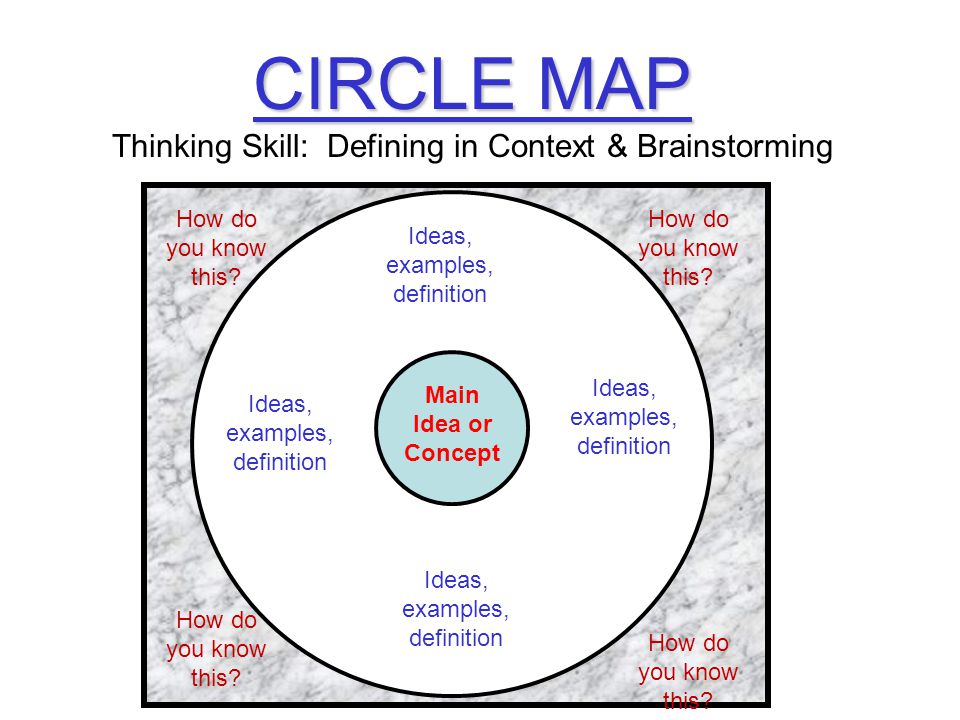
- Circle Maps-- used to define in context and help brainstorm, list, identify.
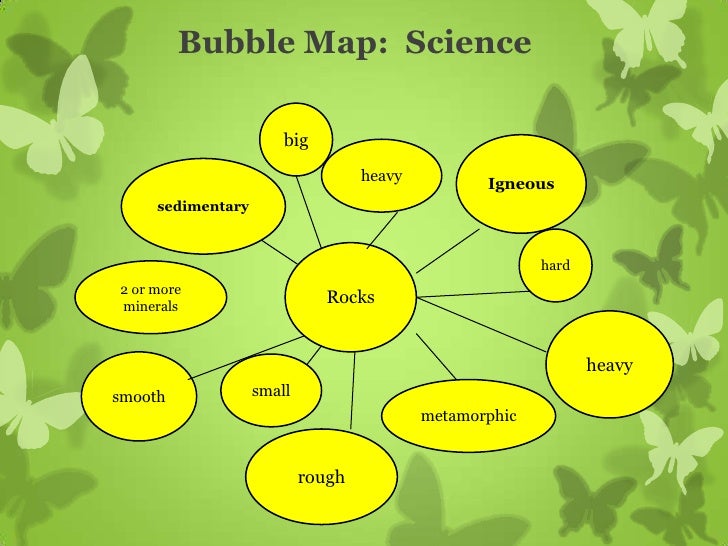
- Bubble Map--As a teacher, you can use this when describing with adjectives or helping identify characteristics, properties, and qualities. Since I'm getting my certification in English, I could see myself using this for a character in a story or a description of a literary genre I will be using such as a fairy tale, science-fiction, etc.
- Double bubble map--This is a great way to use comparing and contrasting! You can analyze characters, objects, time periods, etc. Here is an example below.
- Tree map--This thinking map is great for classifying, categorizing, and grouping things!

- Flow map--The flow map is perfect for sequencing. This works great for stages, order of events, and analyzing patterns. See below for an example. Now you'll remember to make a peanut butter and jelly sandwich or teach your kindergartners!


- Multi-flow--This thinking map works for cause and effect, impacts and/or benefits, reasons and/or results.

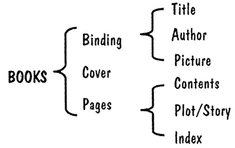
- The Brace Map--If you need a thinking map to help identify part/whole relationships, then this map is for you! This helps to show physical components like the example below. I could see myself using this.
- The Bridge Map-- To help see analogies, the bridge map is your best bet! The bridge map helps connect related ideas and analogies. I love the one below!

Aren't these thinking maps helpful? They'll truly spice up your teaching. I could definitely see myself using all of them. I probably could see myself using tree maps, double bubble, bubble map, and bridge maps on a regular basis. Which thinking map is your favorite?
You difinently will use thinking maps a lot more that what a person would acutally think. They are great tools, ones that are great for review and having students be able to learn, visually, what connects to each other and what does not. You did a great job of laying out how each one is used. the circle map is the one that I have a hard time uderstanding, not sure why though.
ReplyDeleteI know what you mean. I think I have to study that one out a little more. I think it is similar to the bubble map though. It's neat that each thinking map may not work for me, but it will work for someone else. It's nice to have choices!
DeleteWow, you really outlined those thinking maps really well, and provided visuals to help understanding. I have not used hardly any of these strategies, but I do think they can be really helpful. I like your double-bubble map and your tree map illustrations you provided. I think those would work really well in those instances.
ReplyDeleteI think that I really love thinking maps :) Through out my education courses, I thought that teachers use graphic organizers or thinking maps to help struggling students. I was very wrong. They are beneficial for all students. As a future English teacher, I can easily see how to apply the thinking maps to various lessons. I think they would be most helpful in preparing for essay writing. As a class, we can complete the thinking maps. Students can then refer back to them as they begin their writing process. One great thinking map to use for this purpose is the flow map. It would help student sequence the events for their writing. I think this particular map is similar to a story board. Thanks for sharing!!
ReplyDeleteI like that you included all the thinking maps; we talked about in class. In one of Professor Steffes' other classes I took; she introduced us to all the different thinking maps also. Before she introduced them; I truthfully thought there was only one kind of thinking map. The bubble map and maybe I had heard of the double bubble. Other than that the only one we ever used in grade school was the bubble map. So, as a starting map I can see this being used for practice. Then after that I think many other maps should be introduced and used. One of my favorites is the bridge map, especially for comparison or point of view activities. Next, I also like brace maps; I think they do a good job of breaking whole parts or things down for students. I think they can comprehend things easier this way. These are some of the things I think about the different thinking maps.
ReplyDeleteI loved that you gave a clear example of each and how you would use them in your classroom. I agree with you that it’s a great way to help students organize their thoughts and to me I feel like it’s very visually appealing
ReplyDelete